

Walk into any pharmacy or search online for a knee support and you will find everything from a thin elasticated sleeve to a heavy brace with metal hinges on each side. They all promise support, but they do very different jobs. Choosing the wrong one can mean a brace that is too bulky for your daily life, or a sleeve that does not give the stability you were hoping for.
This guide compares the three main families of knee support, explains the differences in plain terms and helps you decide which is likely to suit you.
Knee sleeves: light compression and warmth
A knee sleeve is a pull-on tube of elasticated or neoprene fabric. It provides gentle, even compression, keeps the joint warm and gives a reassuring feeling of support without restricting movement.
Sleeves suit everyday wear, walking, gym sessions and mild aches or stiffness. They are low profile, so they fit under trousers and are comfortable for hours at a time. What they do not do is control sideways movement or hold the kneecap in place to any great degree.
Strapped and stabilised supports: adjustable, mid-level support
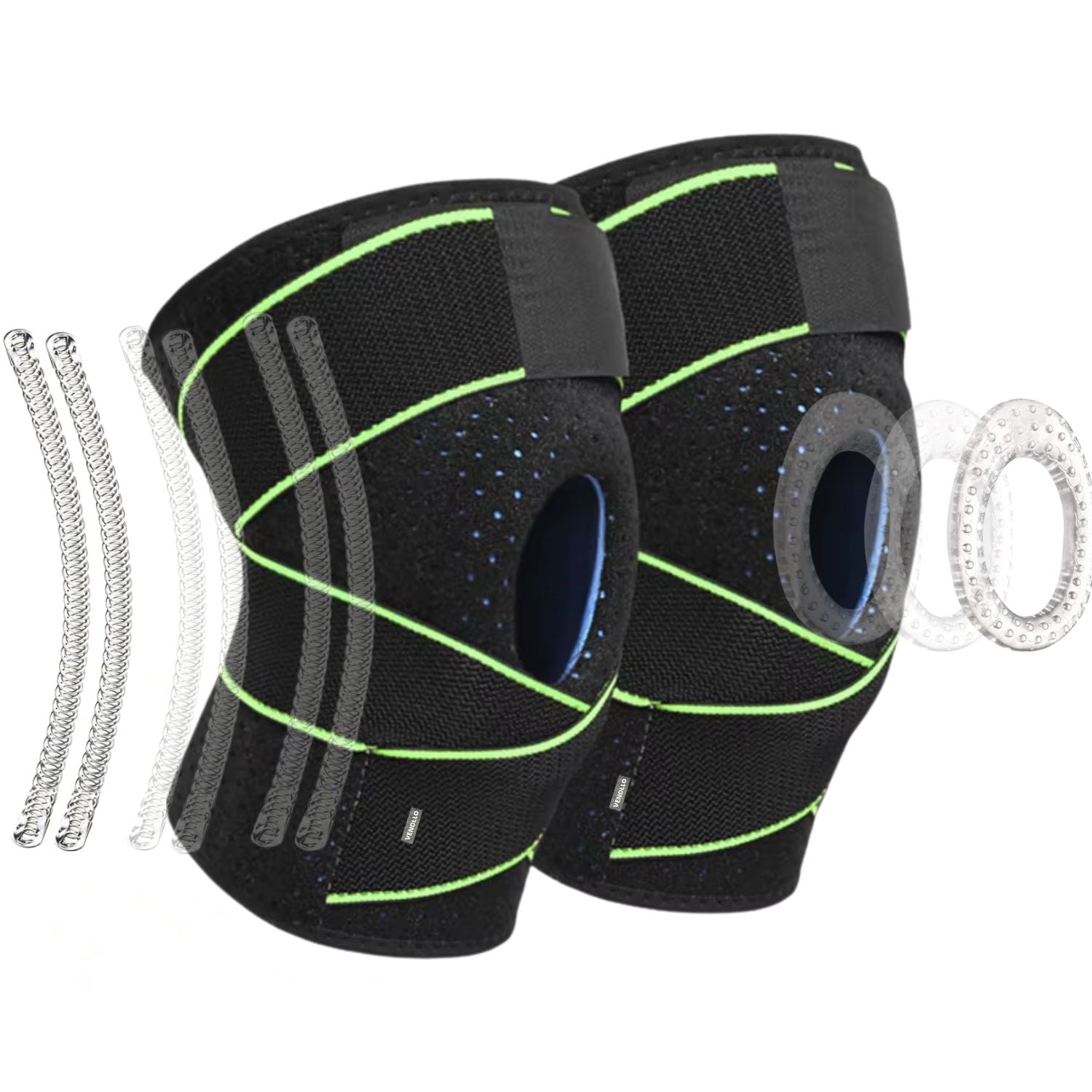
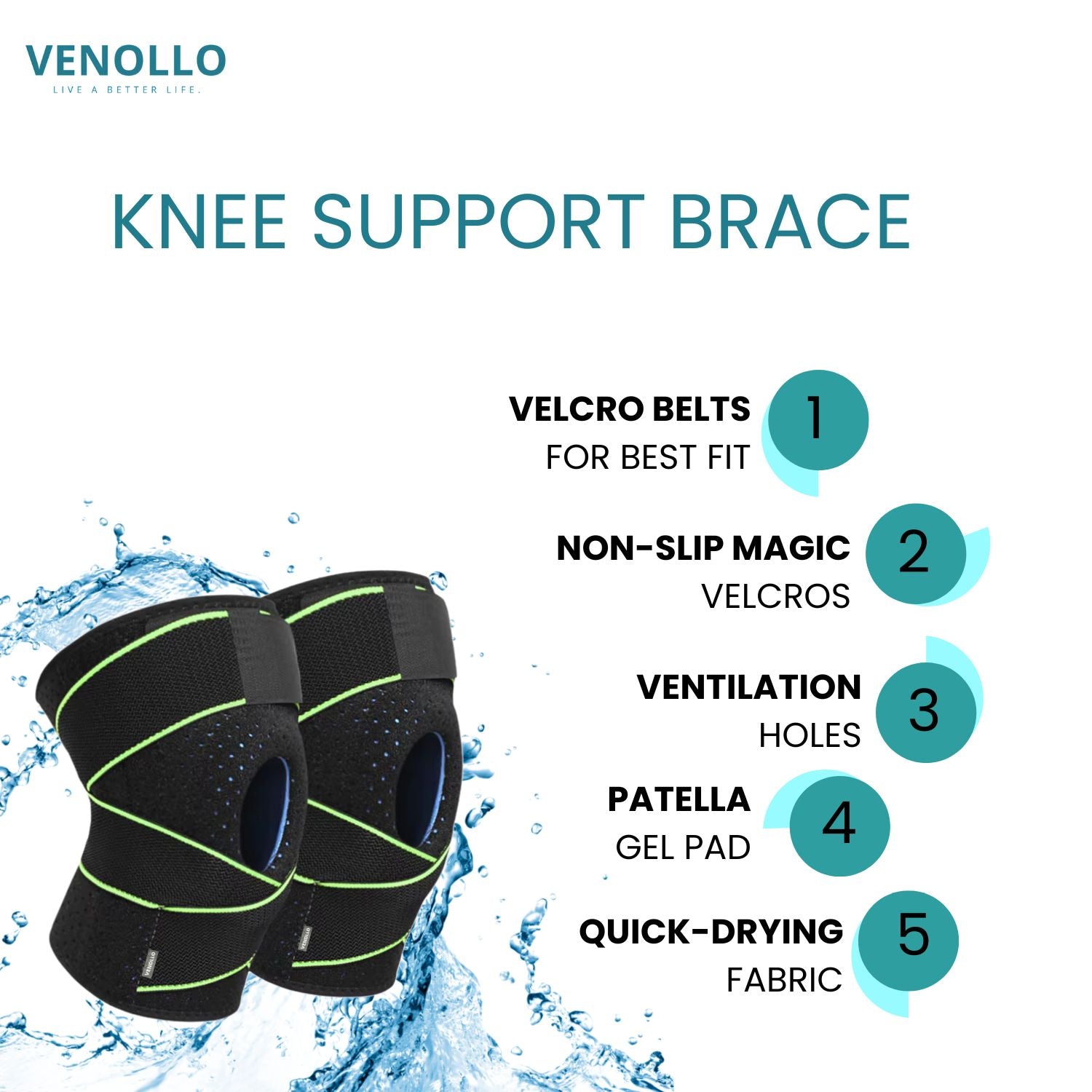
This group includes wraparound supports with adjustable straps, sleeves with a padded ring or gel pad around the kneecap, and supports with flexible side stays or spiral stabilisers. The Venollo knee brace with side stabilisers and patella gel pads sits in this category.
Side stays add resistance to sideways wobble, a patella pad helps keep the kneecap tracking centrally, and straps let you tighten or loosen the fit through the day. These supports are popular for sport, for work that involves kneeling and standing, and for people who want more than a sleeve but do not need a rigid brace.
Hinged knee braces: structured support for instability
Hinged braces have rigid or semi-rigid bars running down each side of the knee, joined by a mechanical hinge that lets the knee bend forwards and back while resisting side-to-side and twisting forces. Some hinges can be locked at set angles.
They are usually chosen for ligament injuries, after surgery, or where a clinician has recommended controlling the range of movement. Because they are heavier and more noticeable, they are less suited to all-day casual wear. If you think you need a hinged brace, it is worth having the knee assessed first so the brace matches the problem.
How to choose between them
- Mild ache, stiffness or warmth needed: a sleeve is usually enough.
- Sport, kneeling jobs or a knee that feels a little unsteady: a strapped or stabilised support gives more control while staying comfortable.
- Diagnosed ligament injury, post-operative recovery or clear instability: a hinged brace, ideally recommended by a physiotherapist or doctor.
- Still unsure? Start with the lightest option that feels secure. You can always move up a level.
Fit and comfort
Whichever type you choose, measure your leg as the size guide instructs, usually around the thigh and calf a set distance above and below the kneecap. The support should feel snug without pinching behind the knee, and the kneecap opening (if there is one) should sit centrally. Loosen or remove the support if you notice numbness, tingling or swelling below it.
When to get advice
See a healthcare professional if your knee locks, gives way, swells quickly after an injury, or if pain is not improving after a couple of weeks. A support can make day-to-day life more comfortable, but it does not replace an assessment.
Frequently asked questions
Can I wear a hinged brace for running?
Some people do, particularly after a ligament injury, but hinged braces are heavier and can rub over longer distances. Many runners find a strapped support with side stabilisers a better everyday option unless a clinician has advised otherwise.
Is a sleeve enough for football or netball?
For light support and warmth, yes. For sports with lots of cutting and pivoting, a support with side stays usually feels more secure.
Do side stabilisers make a brace rigid?
No. Flexible stays add resistance to sideways movement while still letting the knee bend freely. They are a middle ground between a sleeve and a hinged brace.
Explore knee supports
Browse the Venollo knee supports and braces. To go deeper, read our guides on what side stabilisers and a patella gel pad do and choosing a knee brace for sport.
This article is general information and is not a substitute for medical advice. If you have an injury, a health condition or ongoing symptoms, please speak to a qualified healthcare professional.


