

For many people, the first sign that a knee is unhappy is a twinge on the stairs. Walking on the flat feels fine, but going up to bed or down to the kitchen brings a sharp ache at the front of the knee, a feeling of weakness, or a reluctance to put full weight through the leg.
This guide explains why stairs are such a common trigger, what you can do about it day to day, and how a knee support may help.
Why stairs load the knee so heavily
Climbing stairs puts roughly three times your body weight through the knee joint, and going down can be even higher because the muscles are working to control the descent. The kneecap is pressed firmly into the groove of the thigh bone at the angles involved, so any irritation of the cartilage, tendon or surrounding tissue tends to show up here first.
Common reasons stairs hurt
- Front-of-knee (patellofemoral) pain: a dull ache around or behind the kneecap, often worse going down. Frequently linked to how the kneecap tracks and to muscle strength around the hip and thigh.
- Tendon irritation: pain just below the kneecap at the top of the shin, common in people who run, jump or have recently increased activity.
- Wear and tear: stiffness and ache that eases with gentle movement, often worse first thing in the morning.
- Recent injury: a knock, twist or fall can leave the knee sore on stairs for a while even if it felt fine on the flat.
Practical tips for easier stairs
- Lead with the stronger leg going up and the sore leg going down. The old phrase is "up with the good, down with the bad".
- Use the handrail to take some weight, particularly on the descent.
- Face the rail and go sideways on bad days. It changes the angle at the knee and many people find it far more comfortable.
- Take one step at a time rather than alternating feet if that feels better.
- Keep moving between stair trips. Long periods sitting with a bent knee often make the first few steps worse.
How a knee support can help
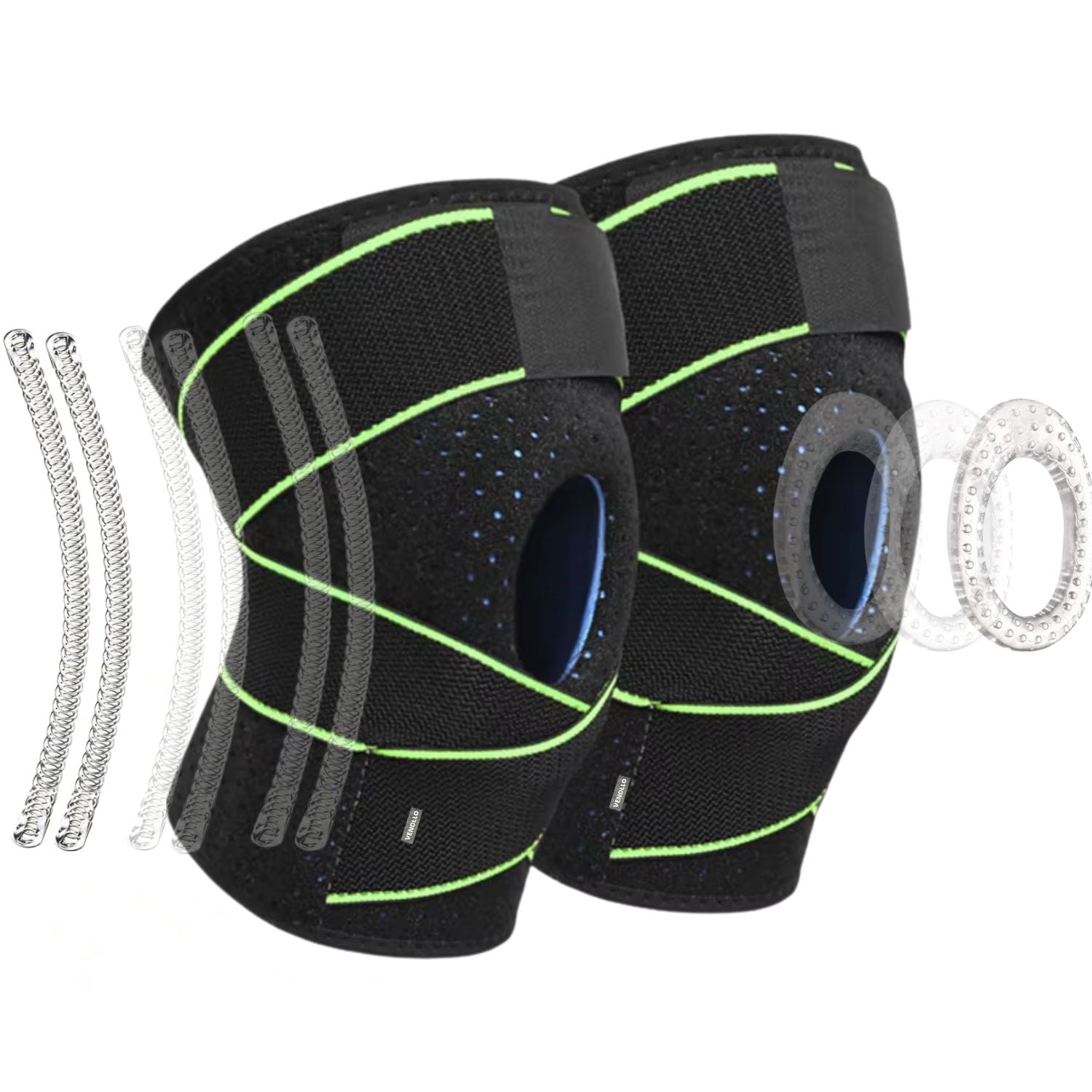
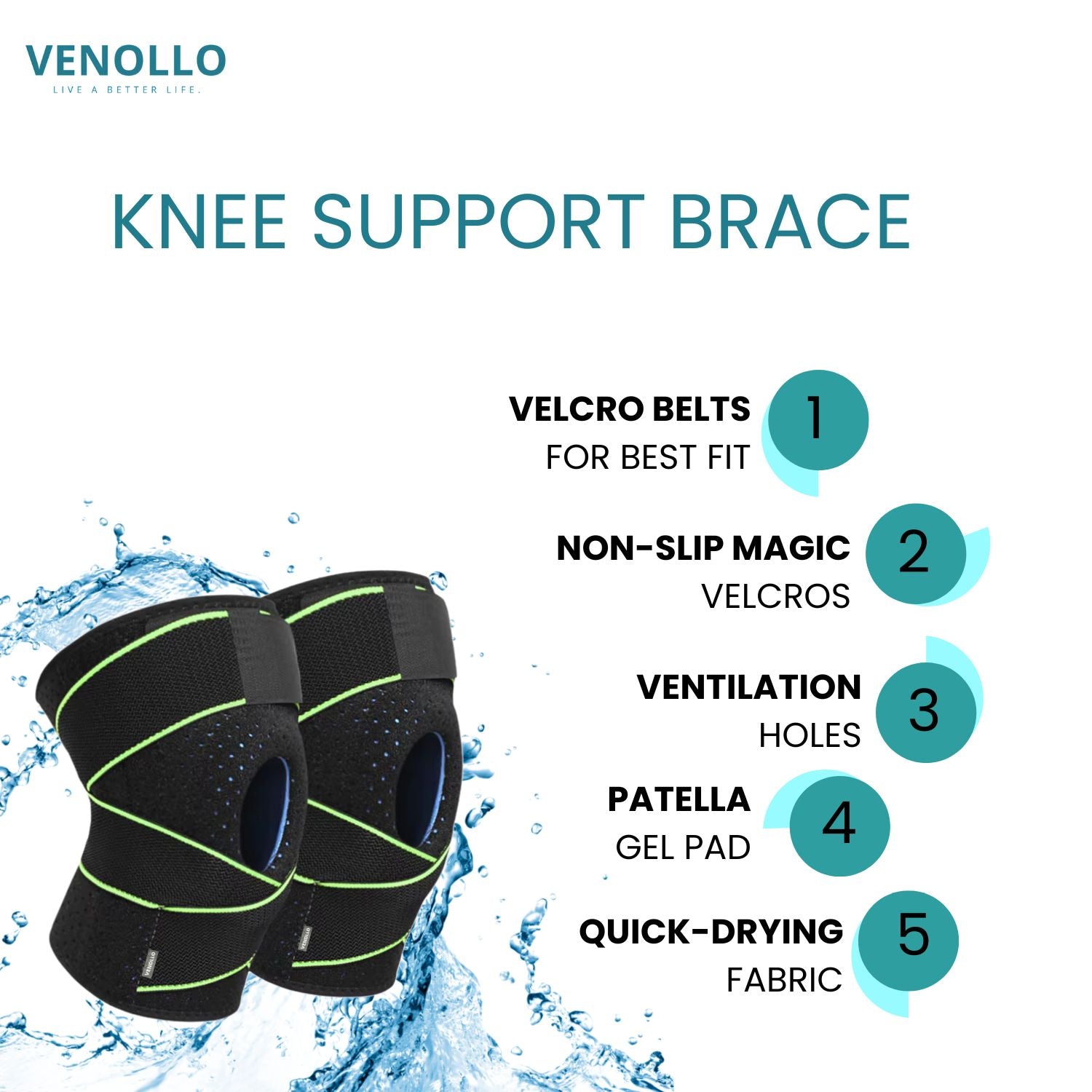
A support will not change what is happening inside the joint, but it can make stairs more comfortable in a few ways. Compression and warmth can reduce the sense of stiffness, a patella pad or ring can help the kneecap track more centrally, and side stabilisers add a feeling of security on the descent. Many people also find that the simple awareness a support gives makes them move more carefully.
For stair-related pain, a sleeve with a patella pad or a strapped support with side stays is a sensible starting point. Choose something low profile enough to wear under clothes, because you will want it on for ordinary daily movement rather than only for exercise.
Strengthening matters too
Stronger thigh and hip muscles share the load with the knee. Simple exercises such as sit-to-stand from a chair, gentle step-ups onto a low step and straight-leg raises are often recommended, but check with a physiotherapist if you are unsure what is suitable for you.
When to get advice
See a healthcare professional if the knee gives way, locks, swells, is hot or red, or if pain on stairs has lasted more than a few weeks despite rest and sensible activity. Sudden severe pain after a fall or twist should always be assessed.
Frequently asked questions
Why does going down hurt more than going up?
The muscles at the front of the thigh work hardest when lowering you down, and the kneecap is pressed into the joint at an angle that aggravates front-of-knee pain.
Should I avoid stairs completely?
Usually not. Gentle, controlled stair use is part of keeping the knee strong. Reduce the number of trips on bad days rather than stopping altogether unless advised.
Will a support make my knee weaker?
Worn for stairs and activity rather than constantly, a support is unlikely to weaken the knee, especially if you are also doing strengthening exercises.
Explore knee supports
Browse the Venollo knee supports and braces, and read our guides on knee support for standing and kneeling jobs and wearing a knee brace all day.
This article is general information and is not a substitute for medical advice. If you have an injury, a health condition or ongoing symptoms, please speak to a qualified healthcare professional.


